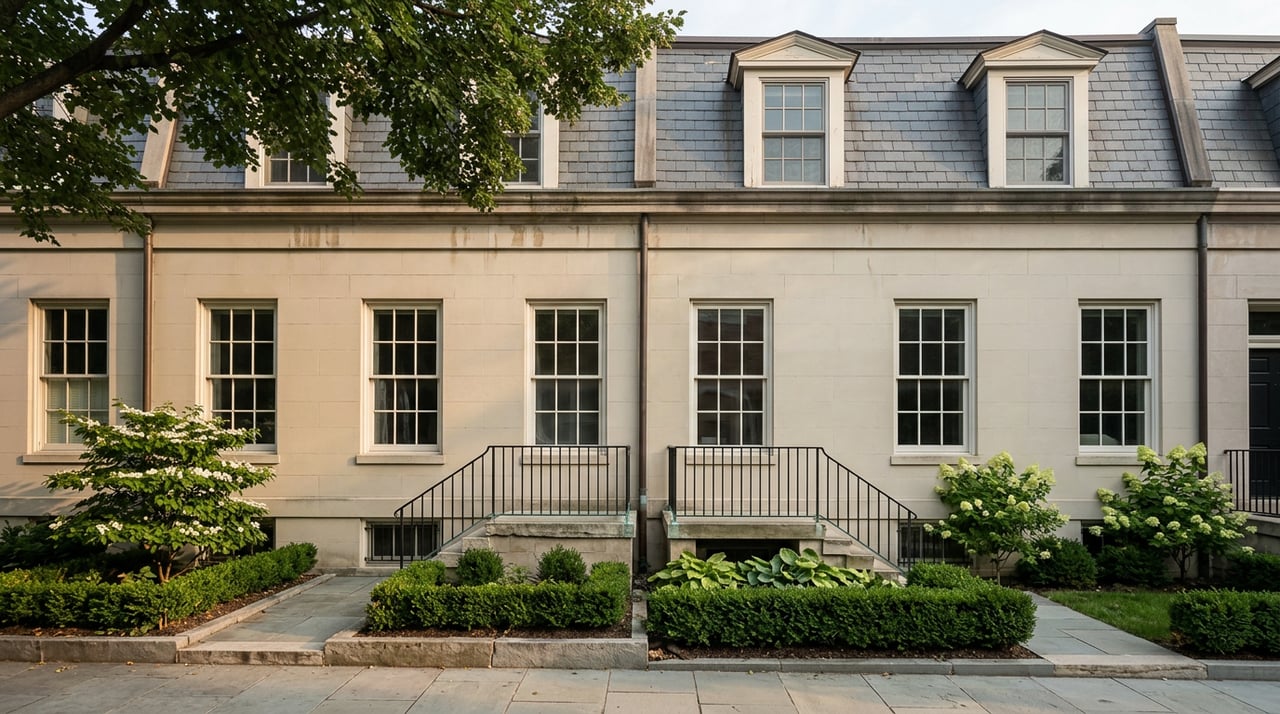
A buyer touring two units three blocks apart off Wisconsin Avenue this spring found out the hard way that "same neighborhood" doesn't mean "same transaction." One listing, a condo near the Metro, closed with a routine conventional mortgage and a deed recorded at settlement. The other, a unit in a building like Ponce De Leon, required a board interview, a financial package with tax returns and references, and a lender who specializes in co-op share loans, because there was no deed to record at all. Same Metro stop. Same commute. Completely different closing.
That gap is the story of Tenleytown and American University Park, two neighborhoods that share the Tenleytown-AU Red Line station, Fort Reno Park, and a school cluster that includes Janney Elementary and Woodrow Wilson High School, but diverged so completely in what got built on each side of the line that comparing their median prices without knowing why is close to meaningless. The difference isn't taste. It's zoning history from over a century ago, and it still shapes what your money buys and what kind of loan you'll need to get it.
The line drawn in 1896
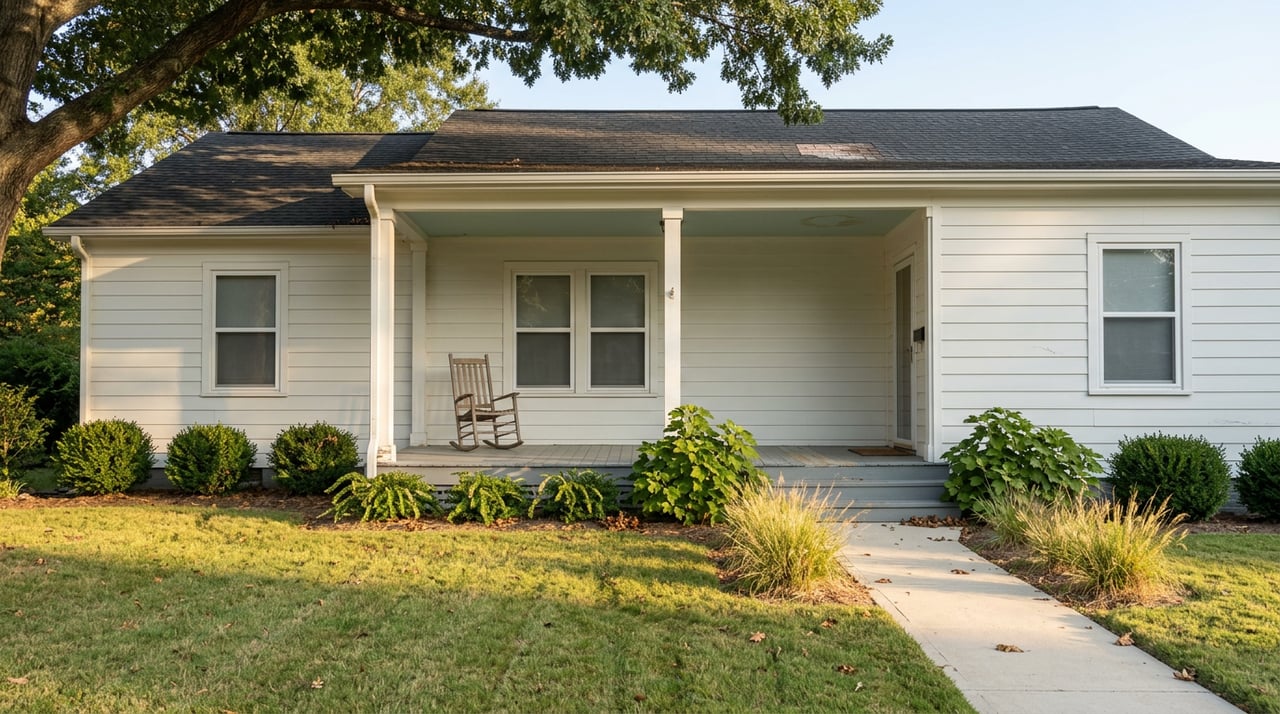
American University Park was platted in 1896 by real estate investors John D. Croissant and David D. Stone, who laid out 54.367 acres as a subdivision from the start, with a first addition following in 1897. The first house built was a large Queen Anne at 4701 Fessenden Street, and ten more went up alongside it within a year. The founding of American University itself in the early 1890s is what drew Croissant and Stone to the land in the first place. Decades later, the W.C. & A.N. Miller Company filled out the neighborhood with the Colonial Revival and Tudor homes that still define most of its blocks today, and the pattern never changed: nearly all of AU Park is detached single-family housing.
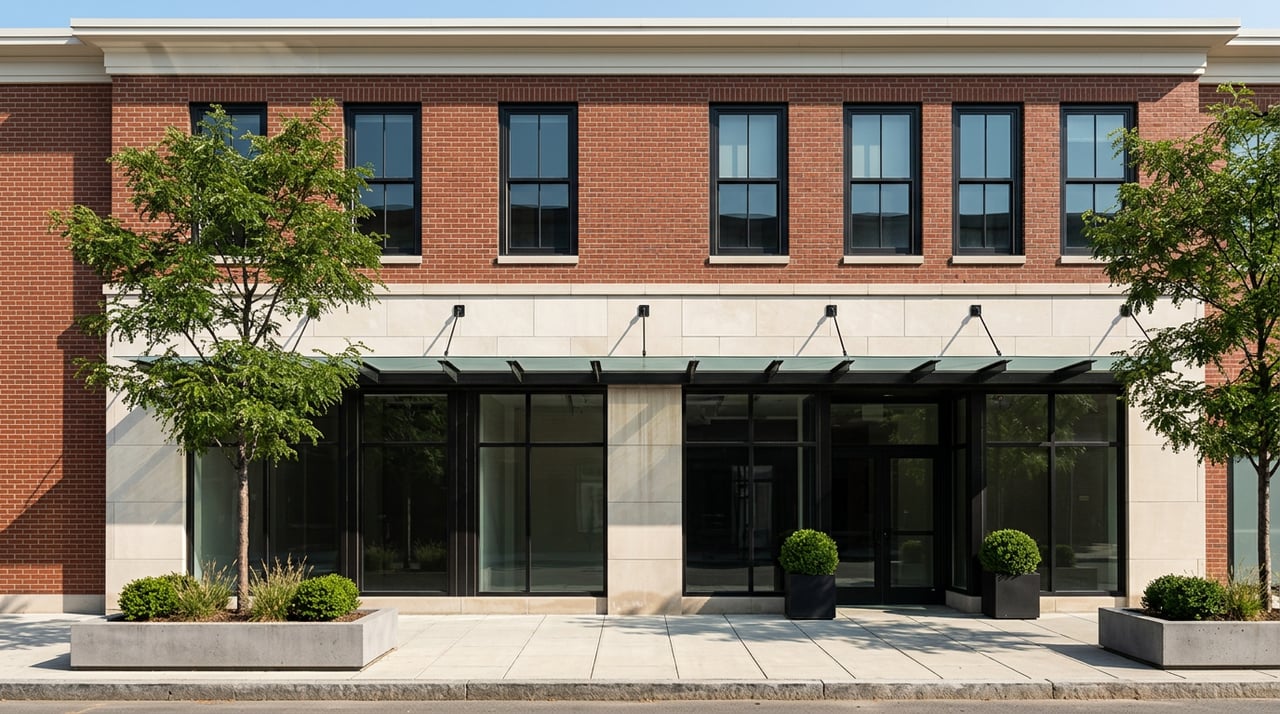
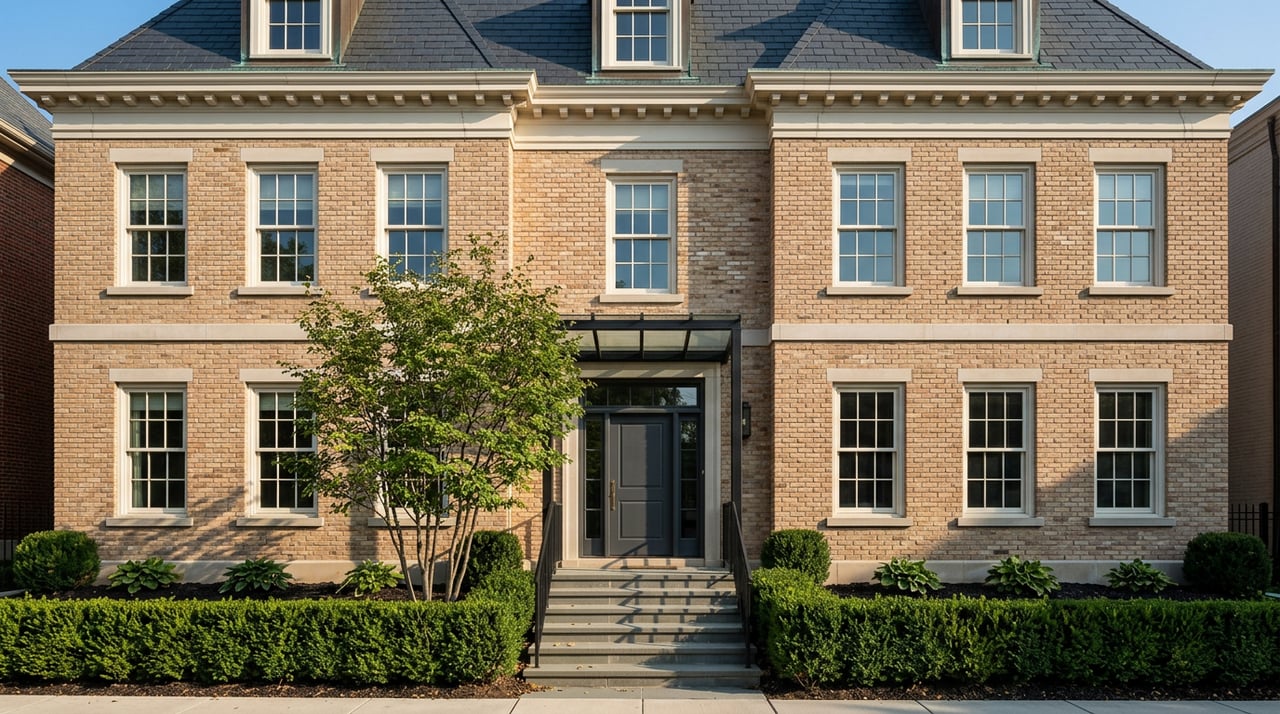
Tenleytown grew differently because it grew around a commercial spine. Wisconsin Avenue north of Albemarle Street became the retail and transit corridor, anchored by what's now the Tenleytown-AU Metro station, and the zoning around that spine allowed apartment buildings, co-ops, and eventually condos in a way AU Park's residential streets never did. That's why you'll find buildings like 4600 Connecticut, Parker House, Ponce De Leon, and The Essex clustered in Tenleytown, along with Tenley Hill Townhomes, while AU Park's inventory stays overwhelmingly single-family.
The practical result: if you want a lower entry point into this part of Northwest DC without leaving the Red Line, Tenleytown's co-op and condo stock is where you'll find it. AU Park doesn't really offer that option, because it was never built to.
| Housing type | Where you'll actually find it | Rough price entry (2026) | Financing note |
|---|---|---|---|
| Detached single-family | AU Park, overwhelmingly | roughly $1.2M to $4M+ | Standard conventional mortgage |
| Condos | Scattered near the Tenleytown border and along New Mexico Avenue | roughly $315,000 to $830,000, depending on the month and exact pocket | Conventional, FHA, or VA in approved buildings |
| Co-ops | Tenleytown buildings like Ponce De Leon | Often listed below comparable condos | Share loan required; smaller lender pool |
| Townhomes | Tenley Hill and nearby Tenleytown blocks | Between condo and single-family pricing | Standard mortgage in most cases |
That condo range is wide because two separate sources pulled slightly different numbers this year, one citing $315,000 to $589,000 and another citing $435,000 to $830,000 for what's functionally the same slice of inventory. Neither is wrong. It reflects how few condo sales happen in this pocket in any given month, which is a pattern worth understanding before you put much weight on a single headline number.
Why one month's median can lie to you
This is where the two neighborhoods create a second, more subtle trap. Tenleytown on its own is a small enough market that a handful of sales can swing the reported median wildly. One tracking service showed Tenleytown's median sale price jumping 253 percent year over year to $1.8 million in November 2025, a number driven by exactly two closed sales that month. A 253 percent jump isn't a market shift. It's what happens when a $600,000 condo and a $3 million renovated Colonial both happen to close in the same 30-day window and get averaged together.
If a neighborhood-level median moves by triple digits in a single month, the first question isn't "what happened in the market." It's "how many homes actually sold."
The more reliable read, when you're comparing AU Park and Tenleytown, is to look at the combined Redfin figures for the American University Park, Friendship Heights, and Tenleytown reporting area together, which showed a median sale price of $1,449,512 in May 2026, up 16 percent year over year. That's a wider sample and a steadier number. A separate source pegged the American University Park median specifically at $1,375,000 as of June 2026. Those two figures roughly agree with each other, which is exactly the kind of cross-check worth doing before you anchor a budget or an offer strategy to a single-neighborhood number that might be built on two or three sales.
The co-op math nobody explains at the open house
If you're pricing out Tenleytown's co-op stock against its condos, the sticker price and the monthly fee are not telling you the same story. A co-op's monthly fee typically bundles the building's underlying mortgage and its property taxes into your dues, on top of maintenance and utilities, which is why co-op fees usually run higher than a condo's separate association fee for a comparable unit. It also means a co-op's lower list price can be an accounting artifact rather than a real discount, because part of what you'd normally finance yourself is already baked into that monthly number.
There's an upside buried in that structure, too. When a building carries an underlying mortgage, your down payment is calculated only on the portion of the price you're actually financing yourself, not the full purchase price. A unit priced at $300,000 with $130,000 of underlying building debt means your effective financed amount is $170,000, so a 10 percent down payment lands closer to $17,000 rather than $30,000. That's a real difference in cash needed at closing, and it's one reason co-ops in buildings like Ponce De Leon can pencil out for a buyer with strong monthly cash flow but less saved for a down payment.
The tradeoff shows up before you ever get to closing. Co-op boards run an approval process that condo associations don't: an interview, a request for tax returns and bank statements, and the right to decline an applicant without explaining why, so long as the decision doesn't violate fair housing law. FHA and VA financing is far less available in co-op buildings, and your lender pool shrinks to those who specialize in share loans. None of that makes a Tenleytown co-op a worse choice. It makes it a different transaction, and one you want to understand before you write an offer whose closing timeline a board interview alone can stretch out.
What crossing Western Avenue costs you
AU Park sits directly against the Maryland line, which means some buyers comparing it aren't just weighing it against Tenleytown, they're weighing it against Chevy Chase or Bethesda a few blocks the other direction. That comparison has its own number worth knowing. DC's property tax rate for owner-occupied homes runs around 0.85 percent of assessed value, while Maryland's runs closer to 1.05 percent. On a $1.5 million home, that gap works out to roughly $3,000 a year, just for being on the DC side of Western Avenue rather than the Maryland side. It's not a reason to choose one jurisdiction over the other on its own, but it's a real number that belongs in the same spreadsheet as school boundaries and commute times, not a footnote you find out about at closing.
A few questions worth asking before you tour
If I want a condo near the Tenleytown-AU Metro, will I end up in AU Park or Tenleytown? Almost certainly Tenleytown. AU Park's inventory is close to entirely single-family, so condo and co-op buyers naturally end up on the Tenleytown side of Wisconsin Avenue.
Is a co-op a problem if I need FHA or VA financing? It can be. Co-op buildings are approved for those programs far less often than condos, so confirm a specific building's status with your lender before you fall in love with a unit.
Should I trust a neighborhood median I see for Tenleytown specifically? Treat any single-month, single-neighborhood median with some skepticism here. Check whether it's built on a handful of sales, and compare it against the wider AU Park, Friendship Heights, and Tenleytown reporting area if you can, since that broader sample tends to smooth out the swings.
Comparing these two neighborhoods well means comparing products, not just prices. If you're trying to figure out which side of Wisconsin Avenue actually fits your financing, your timeline, and your budget, Giovanna Piskulich can walk you through the specific buildings, boards, and numbers involved. Start your move: book a free consultation with Giovanna.