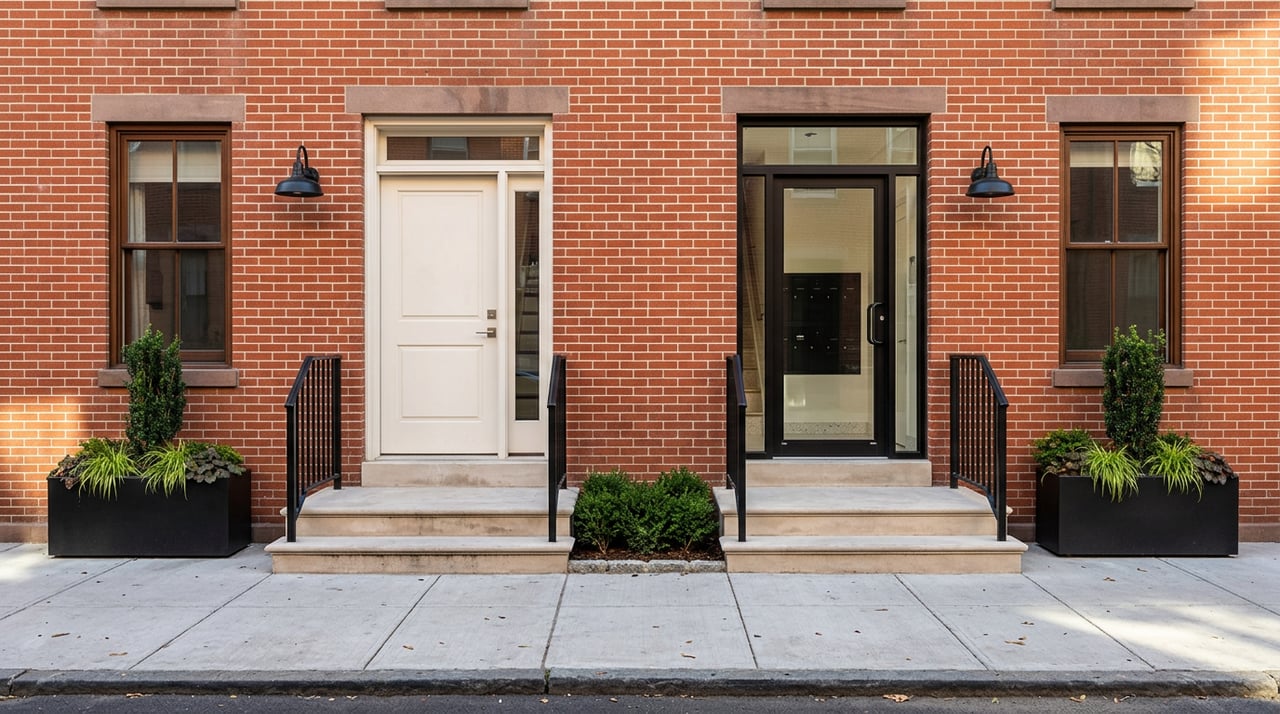
Condo or townhouse — which one fits your life in Arlington right now? If you want walk-to-Metro convenience, predictable monthly costs, and low exterior upkeep, a condo may look perfect. If you want a private entrance, garage, and more control over maintenance, a townhouse might win. In this guide, you’ll compare real numbers, ownership rules, commute tradeoffs, and resale factors so you can choose with confidence. Let’s dive in.
Arlington market snapshot
Arlington County’s overall market is dynamic. Recent county dashboards placed the median sale price near $705,000 in January 2026 for all home types. Within that, condos typically trade lower while townhouses sit between condos and detached homes.
- Condos: many recent snapshots showed a working median range around $350,000 to $500,000 depending on neighborhood and listing vs sold price.
- Townhouses: recent reports placed medians commonly in the $700,000 to $900,000 range, with renovated or end-unit homes in prime areas sometimes exceeding $1 million.
Location, parking, outdoor space, and proximity to Metro are big price drivers. Homes near Rosslyn, Courthouse, Clarendon, Virginia Square, and Ballston often command a premium thanks to transit access and dense mixed-use amenities. The County’s planning pages describe how the Ballston node and the wider Rosslyn–Ballston Corridor concentrate high-rise living, retail, and services.
What you own and maintain
Condo vs townhouse in Virginia
In Virginia, a condominium means you own your unit plus a share of common elements. A “townhouse” is a building style and can be either fee simple or a condo legally. Your deed and community documents define what you own and maintain. You can review definitions and buyer rights in the Virginia Code Title 55.1.
- Condominiums: the association typically insures the building and maintains exteriors, roofs, shared systems, and common amenities. You insure the interior and personal property.
- Fee-simple townhomes: you usually own the structure, exterior, roof, and the lot. Community dues, if any, cover shared grounds or private roads. Some Arlington townhouse-style communities are legally condominiums, so always confirm the recorded documents.
What association fees usually cover
In a condo, your monthly fee often covers building insurance, exterior maintenance, reserves, water or gas, shared amenities, and sometimes concierge or garage operations. High-amenity high-rises cost more. Regional surveys show median HOA or condo fees around a few hundred dollars per month, often about $240 to $260 in the Washington–Arlington area, but building-by-building variation is large. See a national overview of HOA fee ranges from Condo Control.
Townhome communities often have smaller dues because you carry more direct exterior and roof costs. Where the HOA maintains roofs, siding, or private roads, dues can be higher. Local reporting has explored how townhouse dues vary based on services provided, which is why you should read the inclusions line by line. A past deep dive on townhouse dynamics from ARLnow highlights these nuances in Arlington’s market (ARLnow analysis).
Your buyer protections in Virginia
If you buy into a condo or HOA, you are entitled to a resale package that includes governing documents, financials, and insurance information. Under Virginia law, you get a short, unconditional cancellation window tied to receipt of that package in many cases. This is a powerful due diligence tool. Review the relevant statutes in Virginia Code Title 55.1.
Monthly costs, insurance, and financing
HOA and condo fees: what to expect
Before you write an offer, verify the fee amount and the exact list of inclusions. Compare those against what you would pay directly in a fee-simple townhouse. Include a realistic reserve contribution in your analysis. For fee ranges and context, see Condo Control’s overview of HOA fees.
Property taxes in Arlington
Arlington’s adopted residential real estate tax rate for Calendar Year 2025 and Fiscal Year 2026 is $1.033 per $100 of assessed value. On February 26, 2026, the County Board advertised a possible 2-cent increase to a maximum of $1.053 per $100 during budget deliberations. Always check the County’s tax FAQs for the current adopted rate and dates. You can find official details on the Arlington tax FAQs page.
Example calculation for context as of the 2025–2026 rate:
- $450,000 condo assessment at $1.033 per $100 is about $4,649 per year.
- $800,000 townhouse assessment at $1.033 per $100 is about $8,264 per year.
Insurance: HO-6 vs HO-3
Condo owners generally buy an HO-6 policy that covers interior finishes, personal property, liability, and loss assessment coverage. The association carries a master policy for the building. Townhome owners who are fee simple usually carry an HO-3 homeowners policy that covers the structure, exterior, and land. Ask for the association’s master policy limits and master-policy deductible, since a large deductible can affect your exposure. The Insurance Information Institute explains these differences in plain language (HO-6 and condo basics).
Financing and condo project approvals
If you are using FHA or VA financing, the condominium project often must meet program-level requirements or appear on an approved list. If the project is not approved, you may need a different loan or the association may need to pursue approval. That process can take time. Learn more and find FHA resources on HUD’s official page.
Special assessments and reserve health
Ask for the budget, reserve study, and recent meeting minutes. These reveal whether reserves align with upcoming capital work like roofs, garages, or elevators. If reserves are not adequate, associations may levy special assessments, which can affect your cash flow and resale. ARLnow summarizes what to watch for in condo documents in a practical guide (what to look for in condo docs).
Location and lifestyle tradeoffs
Rosslyn–Ballston corridor: walkability and amenities
The Rosslyn–Ballston corridor is Arlington’s model for transit-oriented living. Five Metrorail stations anchor dense, mixed-use urban villages with many condo buildings, retail, and services. This setup can cut car dependence and simplify daily routines. Read more about the planning vision on the County’s Rosslyn–Ballston Corridor page and confirm station details on WMATA’s station guide.
What this often means for you:
- Strong walkability and shorter trips to DC on the Orange, Silver, and Blue lines.
- Higher building amenities with fees to match.
- Smaller private outdoor space compared to most townhouses.
More residential pockets: Fairlington and beyond
Outside the main corridor you will find townhouse communities, garden-style properties, and streets with more space and garages. Fairlington is a well-known example. Built as garden and townhouse communities, it now includes a mix of condo and townhouse ownership structures, lower dues in some villages, access to parks, and strong bus connectivity rather than direct Metrorail stations. The Washington Post offers historical and neighborhood context in its profile of Fairlington (Fairlington overview).
Parking and street permits
Garage and assigned parking vary widely. Inner-corridor condos may include a deeded or assigned garage space, sometimes at added cost. Many townhouses include private garages or driveways. If you plan to keep a car, check Arlington’s Residential Permit Parking program for zone eligibility and permit costs on the County site (Residential Permit Parking).
Commute time calculus
Arlington residents’ mean travel time to work is about 26.6 minutes according to recent American Community Survey data. Living near Metro can trim both time and transportation costs if you do not need a car daily. If you are a multi-car household or value a private garage, a townhouse in a residential pocket may suit your routine better. See county-wide commute stats on U.S. Census QuickFacts.
Resale and long-term outlook
Over long market cycles, fee-simple ownership such as townhomes often shows stronger price resilience compared with condos because the land component is scarce. In some recent months, Arlington’s condo segment showed softer pricing while townhomes and detached homes held firmer. The pattern varies by neighborhood and time frame, so use current comps when you are ready to offer.
Buyer pools can differ by property type. Condos near Metro attract a wide mix of commuters, downsizers, and investors, though some associations limit rentals or require minimum owner-occupancy levels. Townhouses often draw move-up buyers and those who need garages or private outdoor space. If you plan to use VA or FHA financing, check project approval status early since it can influence both purchase options and future resale to similar buyers. For financing context, see this program overview for VA condo purchases (VA condo program notes).
The step-by-step checklist to decide
Use this flow to compare a specific condo and a specific townhouse side by side.
- Confirm the legal form
- Read the deed and declaration to confirm fee-simple townhouse vs condominium regime. Do not rely on the listing label. Review definitions and buyer rights in Virginia Code Title 55.1.
- Order and review the resale package
- Note the date you received it. Virginia law provides a short unconditional cancellation window tied to this delivery in many cases. Verify rules, budgets, reserves, and insurance in the documents. See the Virginia Code for statute references.
- Line item the monthly fee and inclusions
- List everything the fee covers: master insurance, water, gas, trash, parking, concierge, cable or internet, snow removal, and reserve contributions. Compare the condo fee to likely out-of-pocket costs in a townhouse. Use Condo Control’s fee overview for context.
- Check insurance scope and deductibles
- Ask for the association’s master policy certificate and deductible amount. Decide whether you need loss assessment coverage on your HO-6. Review condo insurance basics at the Insurance Information Institute.
- Scan for red flags in the minutes
- Look for rental caps, pending litigation, capital projects, or recent special assessments. ARLnow’s guidance covers what to spot in condo docs (what to look for).
- Confirm financing fit
- If you need FHA or VA financing, verify project approval status with your lender early. FHA resources and tools are available on HUD’s official site.
- Map commute and transit access
- Identify the nearest Metro station or bus routes and estimate door-to-desk time. Use WMATA’s station guide. Compare against county-wide commute averages from the U.S. Census QuickFacts.
- Verify parking reality
- Confirm deeded or assigned spaces, guest parking, and any garage fees. Check zone eligibility and permit pricing under Arlington’s Residential Permit Parking program.
- Estimate taxes and total monthly cost
- Apply Arlington’s current residential tax rate to the likely assessed value. As of the 2025–2026 rate, $1.033 per $100 equals about 1.033 percent annually. See the County’s tax FAQs for updates and any Board actions, such as the February 26, 2026 advertised maximum.
- Compare neighborhood comps and time on market
- Focus on recent solds for similar size, parking, outdoor space, and distance to Metro. Note days on market and list-to-sale ratios in the same micro-area. Re-check numbers right before you offer, since Arlington’s condo and townhouse segments can move differently month to month.
Ready to compare homes one-on-one?
Whether you are local or relocating to the DC area, you deserve a clear path to the right home. If you want help pricing tradeoffs in your exact target neighborhoods, I will walk you through fees, reserves, financing options, and commute modeling so you can decide with confidence. Start your move with a friendly, bilingual consult. Reach out to Giovanna Piskulich.
FAQs
What is the key legal difference between a condo and a townhouse in Virginia?
- A condominium is a legal ownership structure where you own your unit and share common elements, while a townhouse is a building style that can be fee simple or part of a condo regime. Always confirm the legal form in the deed and the recorded documents, and review the Virginia Code Title 55.1.
How much are typical HOA or condo fees for Arlington properties?
- Regional surveys place median HOA or condo fees in the few-hundred-dollars range, often about $240 to $260 per month, with high-amenity buildings costing more and small communities less. See Condo Control’s overview for context and verify each building’s inclusions.
What should I look for in condo or HOA resale documents before I buy?
- Review the budget, reserve study, master insurance, meeting minutes, rental rules, and any special assessments. Virginia gives many buyers a short unconditional cancellation window tied to receipt of the resale package. ARLnow’s guide explains practical red flags (condo docs tips).
How do Arlington property taxes affect my monthly budget?
- As of Calendar Year 2025 and Fiscal Year 2026, the residential rate is $1.033 per $100 of assessed value. Example: $450,000 assessed equals about $4,649 per year. Check the County’s tax FAQs for updates and any advertised changes, such as the February 26, 2026 Board action.
Do condos near Metro resell better than townhouses farther out?
- It depends on the cycle and micro-location. Fee-simple homes like townhouses often show stronger long-run resilience, while Metro-proximate condos can offer steady demand from commuters and downsizers. Compare recent local comps for your exact neighborhood and re-check before you offer.
Can I use FHA or VA financing to buy a condo in Arlington?
- Often yes, but the condo project must meet program requirements or be on an approved list. Confirm early with your lender. Review FHA resources on HUD’s site and ask your agent to verify project status.